
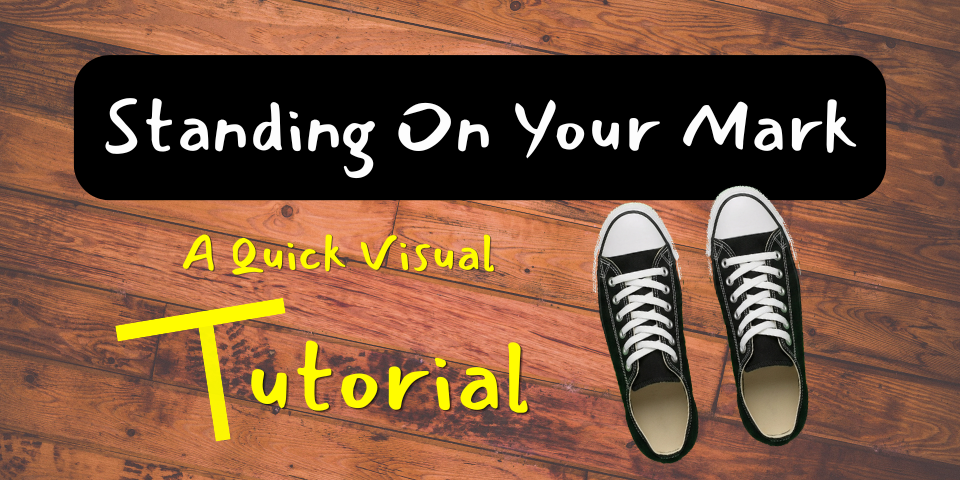
When you are standing in on a TV or film project, you might observe tape all over the ground. The tape may be in multiple colors, and it might be in T-shaped arrangements. In all likelihood, these are “marks” for actors. Typically, these marks indicate where actors stood in rehearsals or otherwise should stand when filming a scene.
Stand-ins substitute for these actors, and they are used primarily for lighting and camera rehearsals. Stand-ins stand on these marks so that production knows exactly where actors stood or should stand, so they know exactly how to set up shots.
Although mastering the principles of standing on a mark should come pretty fast, for not all new stand-ins is it obvious what to do — and what not to do — around marks.
This quick visual tutorial aims to help a new stand-in understand how to stand on a mark — as well as how not to stand on a mark.
A Mark
Here is an image of a mark you might see on the ground. It is usually comprised of two pieces of tape in a certain color assigned to your actor.

This mark is yellow, so all of the yellow marks on the ground represent where your actor stood or should stand. You would only stand on the yellow marks; no other stand-in would stand on your yellow marks. (The other stand-ins have their own colored marks to stand on.)
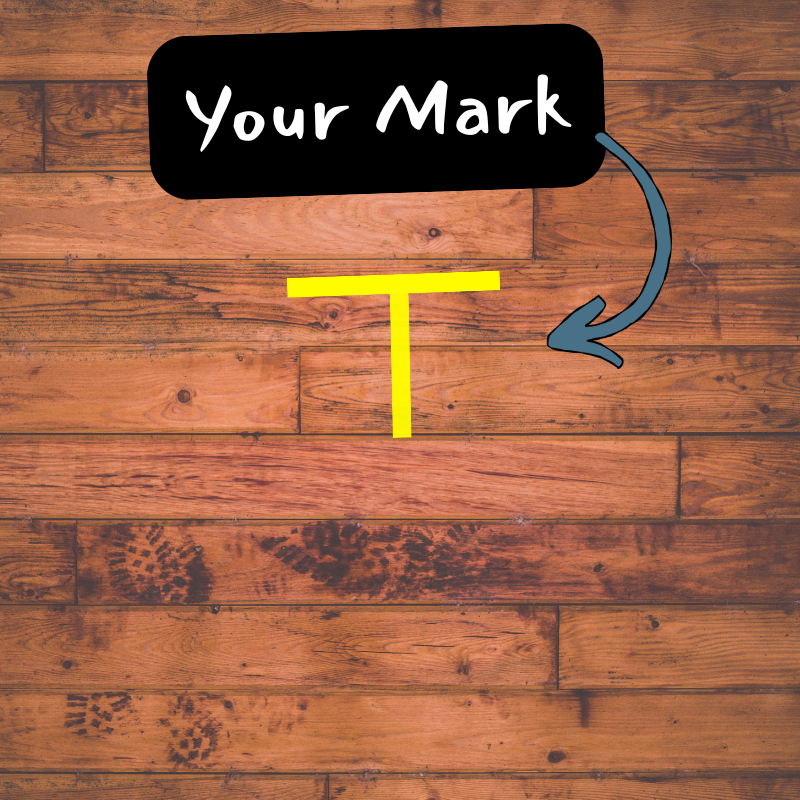
If this is the first place your actor stood in a scene, this mark would be called your “one.” If your actor moves in the scene, then your actor should have second mark, which would be called your “two.” Typically, when first standing in, you would go to your one.
“Where Do I Put My Feet?”
The biggest question new stand-ins have when approaching a mark for the first time is, “Where do I put my feet?”
Although for some stand-ins, the answer is obvious, for other stand-ins, the answer is not obvious. This may be because of the overwhelm of being on set for the first time, or being around new people, or simply not having experience standing in or being on a set.
Usually, with a quick tutorial, new stand-ins quickly learn the principles of standing on a mark.
Where Your Feet Should Go
The following images demonstrate two very wrong ways to stand on a mark:
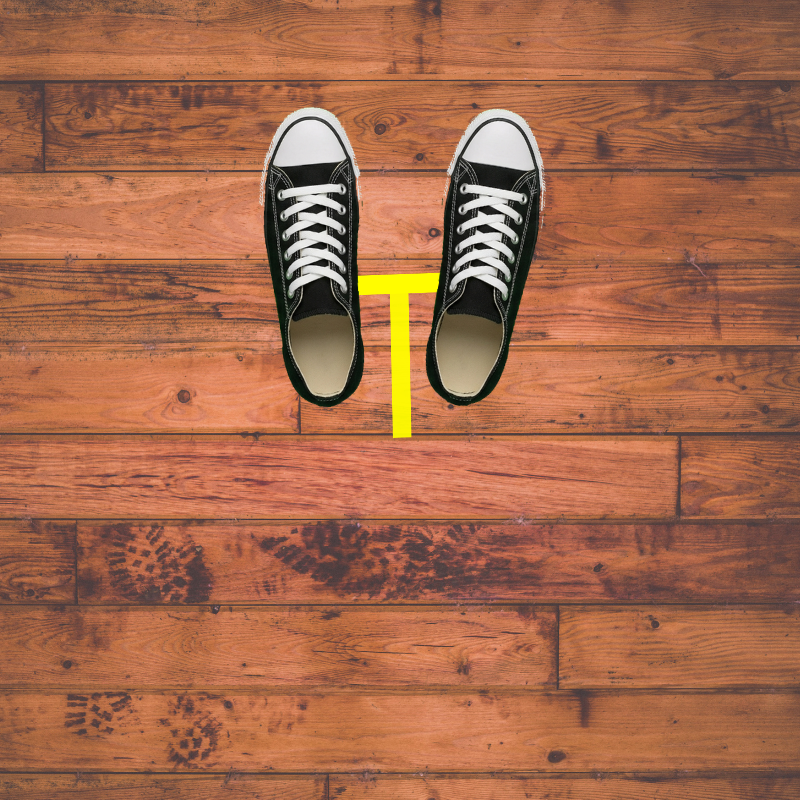
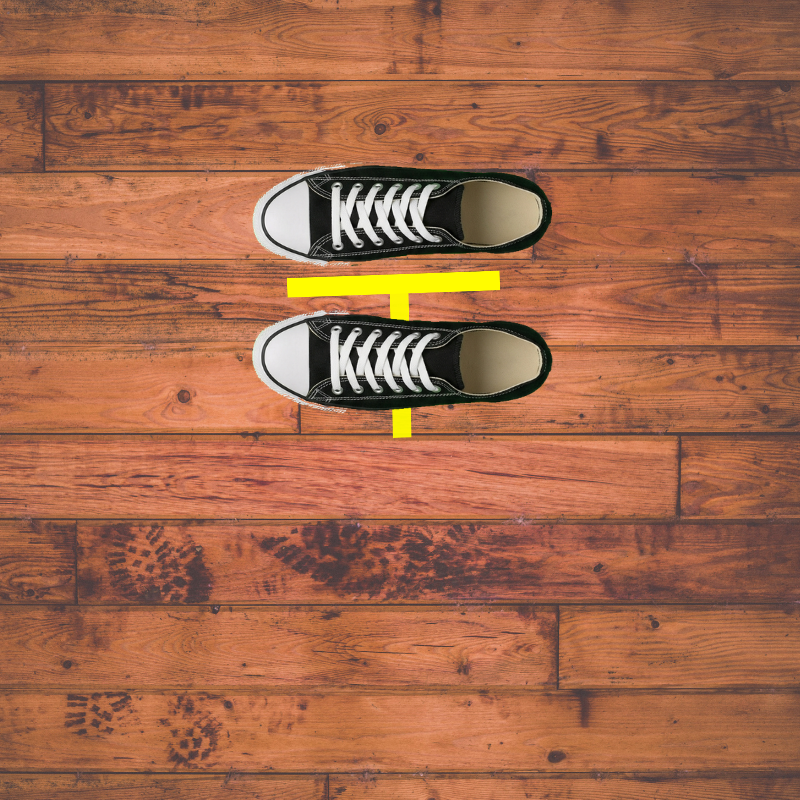
Although stand-ins approaching marks for the first time might instinctually gravitate to either of these ways, a quick orientation should be all that’s needed to get them up to speed on how to stand on a mark.
Ideally, you should stand on your mark like this:
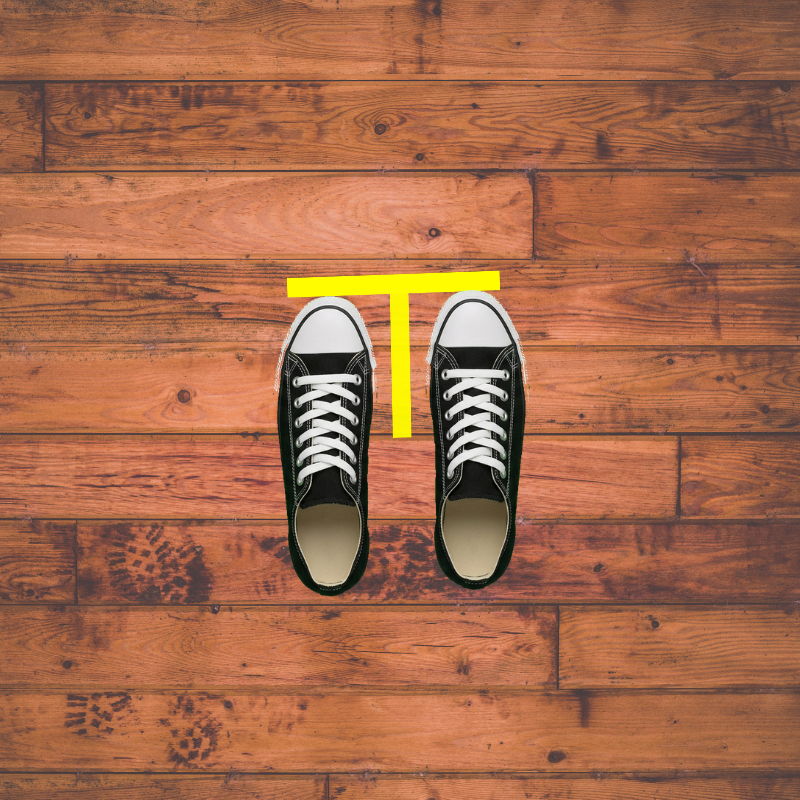
Ideally, you want your feet on either side of the stem of the T. (The stem is the vertical piece of tape.)
Next, you want your toes to touch the underside of the crossbar of the T. (The crossbar is the horizontal piece of tape.)
You’ll notice in this picture, your feet are on either side of the stem, with your toes just touching the underside of the crossbar.
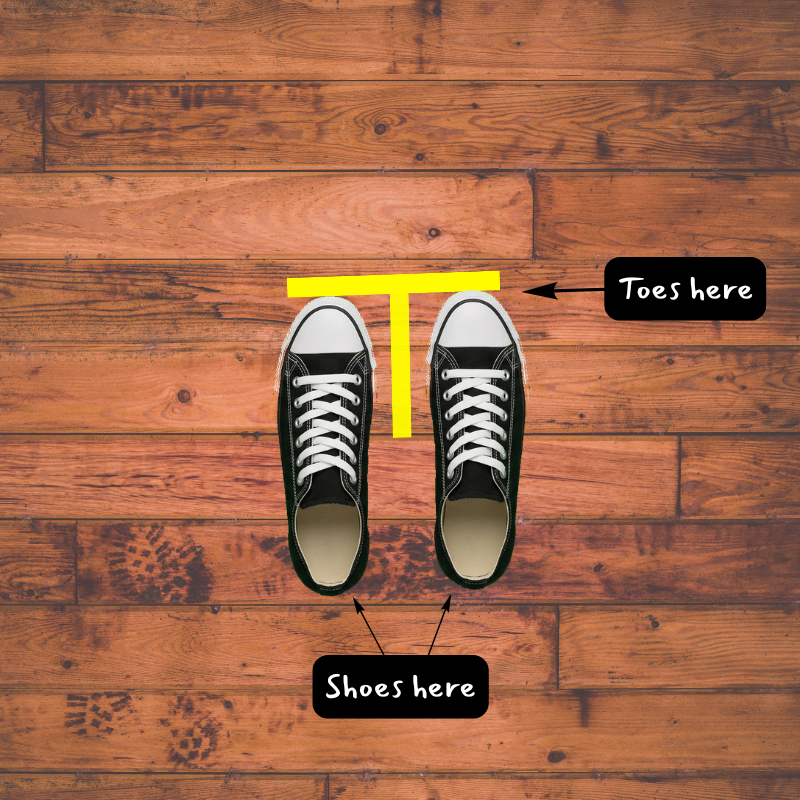
You probably can’t go wrong standing on a mark like this.
Where Your Feet Should Go (Height Adjustment Version!)
With that said, sometimes stand-ins need to get a little shorter for the sake of setting up a shot.
Although some stand-ins may crouch to get shorter (which can be a bit exhausting and visually unappealing), other stand-ins simply spread their legs a bit, effectively lowering their height.
When you spread your legs, your feet are going to be farther apart and therefore farther away from the stem of your mark. This is okay as long as your body is centered on the mark and your toes would otherwise align with the crossbar, as in this image:

Where Your Feet Can Maybe Go
On some TV and film sets, things can be a little more relaxed.
It may not be “bad” or “wrong” to stand on your mark a little looser, with your feet not exactly touching the crossbar:
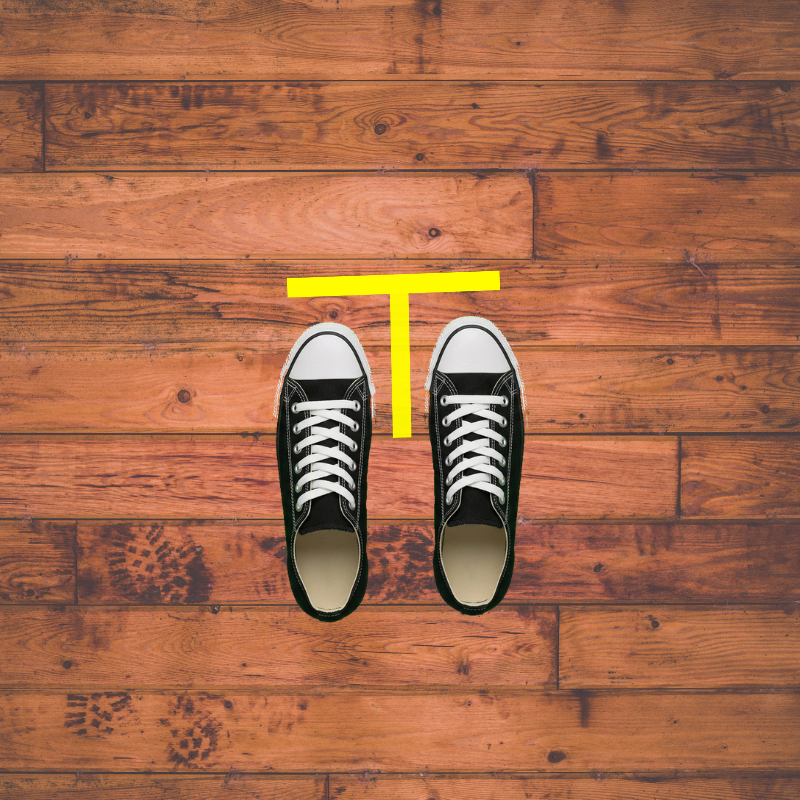
In the above image, you might be pushing things a little bit in terms of standing on your mark. But if a shot is not super precise, standing on your mark in this way can be reasonable.
Of course, if someone wants you to hit your mark or “toe up,” you should aim to have your toes touch the crossbar.
Where Your Feet Shouldn’t Go
In the below image, though, you probably have pushed things too far by being too far away from your mark. Being so far away may negatively affect how the lights and camera are set up for the shot, if production doesn’t catch you missing your mark:

Overshooting your mark is not uncommon, especially when you are performing a rehearsal (known as a “second-team rehearsal”).
There can be a lot of moving parts during a rehearsal, and in moving from one mark to another, you might not be able to see your second mark and thus overshoot it a bit. Although this is understandable, you want to try to avoid doing this as best you can:

Of course, you could also “miss your mark” by going off to one side or another. You also want to avoid doing this:
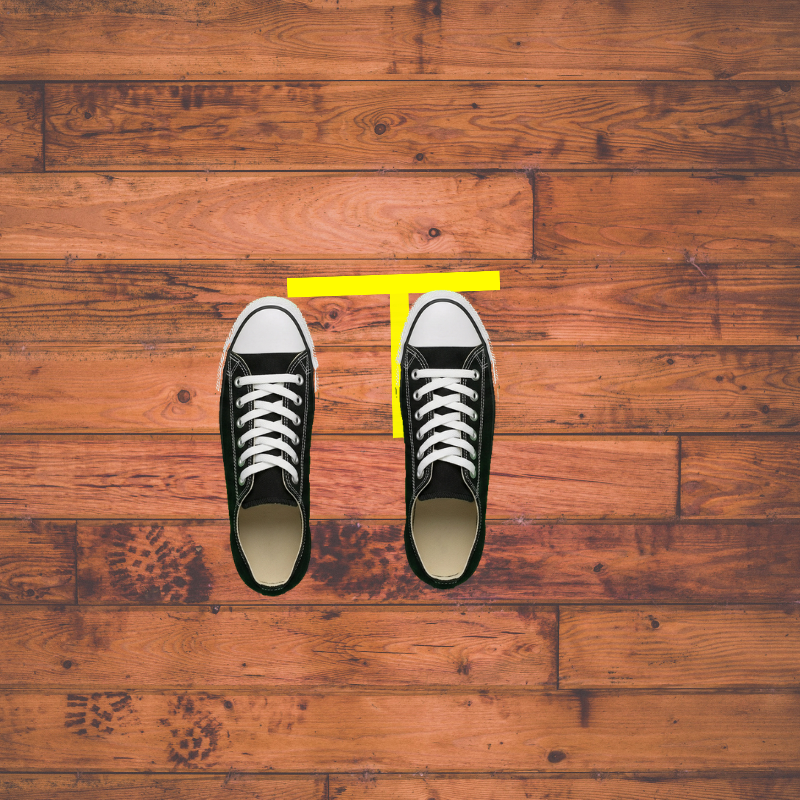
Your Mark Is Your “Place”
For stand-ins, marks can feel like “home” or their “place.” In all of the moving parts of a set, along with the feeling sometimes that you might not belong, marks tell you clearly where you should be. They are almost like a reserved place for you on set..
With that said, you don’t need to be afraid of your mark. Step up to your mark. It’s where you should be. Doing this won’t cut it:

A Final Note about Adjustments
When you stand in, a crew member may tell you to move away from your mark or turn in a different orientation than your mark. Effectively, the crew member is tweaking your position. If this new position suits the crew member, they may ask a camera assistant to “remark” you.
You may or may not notice when a camera assistant remarks you (they can be like ninjas sometimes!). But be mindful of your new marks.
There may be times in the interim where you’ve been adjusted, but that adjustment is not yet reflected in the marks. Then, another crew member might ask why you are standing off your mark. You can simply say you need to be remarked, or are waiting to be marked, or you believe this is a new mark, or something reasonable to that effect.
Conclusion
As you can see, a quick visual tutorial is all you might need to feel comfortable standing on a mark. Happy standing-in!
Did you find this tutorial helpful? Are there other ways stand-ins have stood on their marks? Post your thoughts in the comments!
Discover more from Stand-In Central
Subscribe to get the latest posts sent to your email.






Leave A Comment